


Batman (1989) – The Dark Knight’s Cinematic Rebirth
When Tim Burton’s Batman hit theaters in 1989, it didn’t just redefine superhero movies—it redefined what a blockbuster could be. Released at a time when Batman was still widely associated with the colorful camp of the 1960s Adam West TV series, Burton’s vision introduced audiences to a darker, moodier, and more cinematic take on Gotham’s Caped Crusader.
The Story
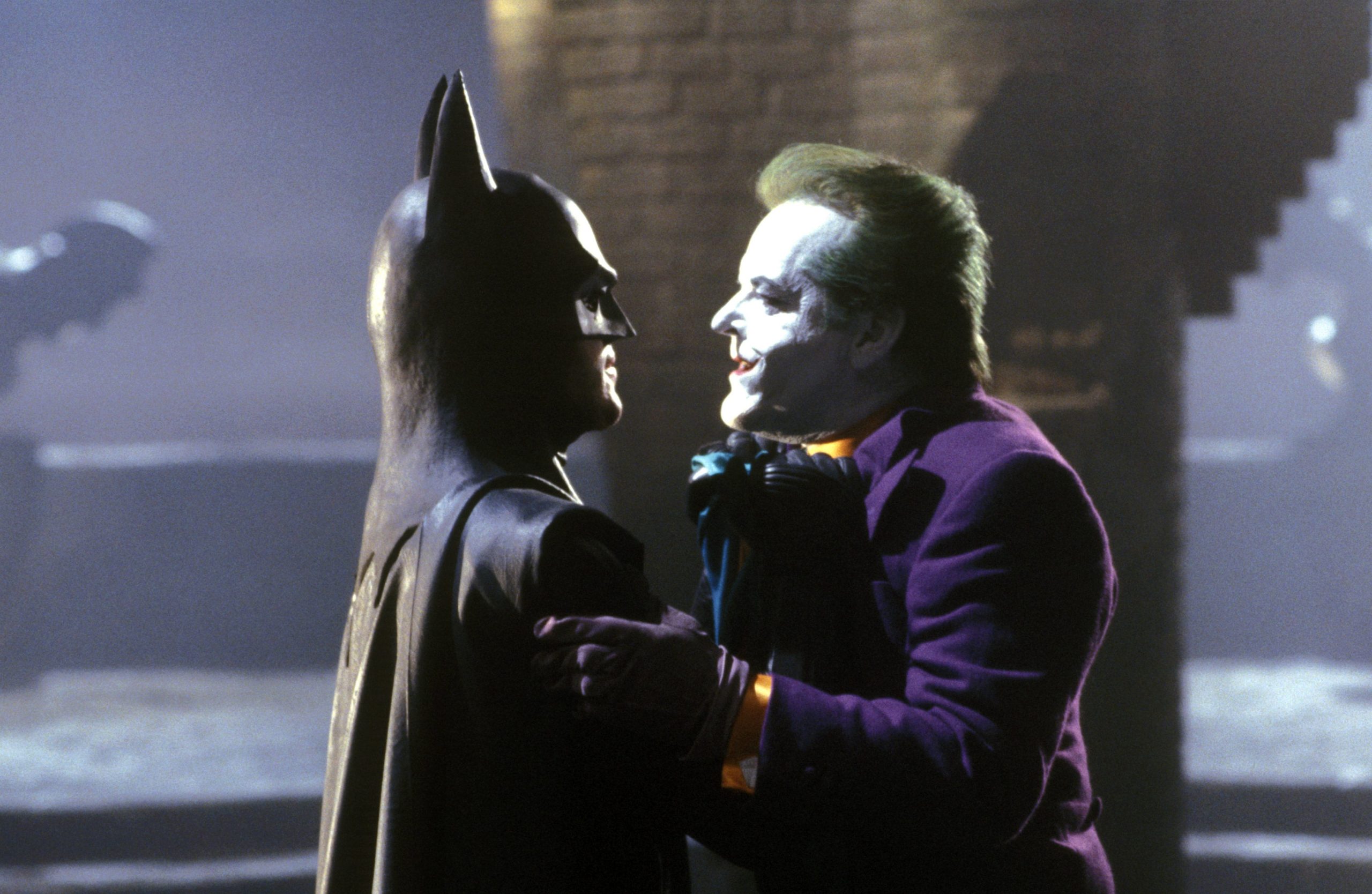
The film follows the rise of Batman (Michael Keaton), a mysterious vigilante who stalks the streets of Gotham City, striking fear into the hearts of criminals. As Gotham battles corruption and decay, a new villain emerges: Jack Napier (Jack Nicholson), a mobster who, after falling into a vat of chemicals, becomes the maniacal Joker.
The story centers on Batman’s struggle to protect Gotham while grappling with his dual identity as billionaire Bruce Wayne. At the same time, photojournalist Vicki Vale (Kim Basinger) investigates the mysterious hero and becomes caught between Batman and the Joker in a battle for Gotham’s soul.
The Cast
The film’s casting drew headlines before release, but the performances helped cement Batman as a classic:
Michael Keaton as Bruce Wayne / Batman – Initially controversial due to his comedic background, Keaton’s intense and brooding performance won fans over.
Jack Nicholson as the Joker – A legendary, larger-than-life portrayal that mixed menace with flamboyance, setting a high bar for comic book villains.
Kim Basinger as Vicki Vale – A courageous photojournalist and Batman’s love interest.
Robert Wuhl as Alexander Knox – A reporter adding both humor and perspective.
Michael Gough as Alfred Pennyworth – Loyal butler and confidant, reprising the role across multiple Batman films.
Jack Palance as Carl Grissom – Gotham crime boss and Napier’s ruthless employer.
The Style and Vision
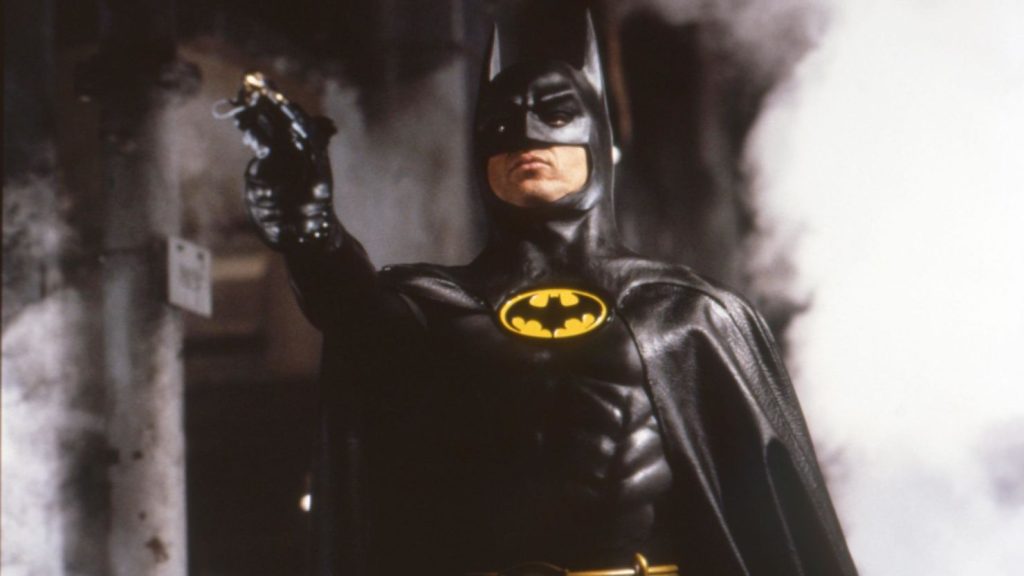
One of Batman’s defining features is its visual style. Director Tim Burton, known for his gothic sensibilities, collaborated with production designer Anton Furst to bring Gotham to life. The city was depicted as a towering, twisted urban nightmare—equal parts art deco and dystopia—earning Furst an Academy Award for Best Art Direction.
The film’s atmosphere was further heightened by Danny Elfman’s haunting score, which became the definitive Batman theme, and Prince’s soundtrack, which infused Gotham with an eccentric, pop-art edge.
Impact and Reception
Upon release, Batman was a cultural phenomenon. It earned over $400 million worldwide, becoming one of the highest-grossing films of the decade. Merchandise—from toys to clothing—was everywhere, sparking Batmania across the globe.
While some critics noted that Nicholson’s Joker overshadowed Keaton’s Batman, the film received praise for its darker tone, striking visuals, and willingness to take the superhero genre seriously.
Legacy
Batman (1989) changed the superhero landscape. It paved the way for the modern comic book blockbuster, showing studios that audiences wanted darker, more mature takes on heroes. Without Burton’s Batman, films like The Dark Knight trilogy or the MCU might not exist in the form we know today.
It also launched a string of Batman sequels in the ’90s, starting with Batman Returns (1992), and set the stage for Batman’s enduring cinematic legacy.
Conclusion
Tim Burton’s Batman remains a landmark film in cinema history. With Nicholson’s unforgettable Joker, Keaton’s brooding Dark Knight, and Burton’s gothic vision of Gotham, it wasn’t just a superhero movie—it was an event that reshaped pop culture. Thirty-plus years later, its influence is still felt in nearly every comic book film that follows.
