




Valerian and the City of a Thousand Planets – A Sci-Fi Spectacle That Fell Short
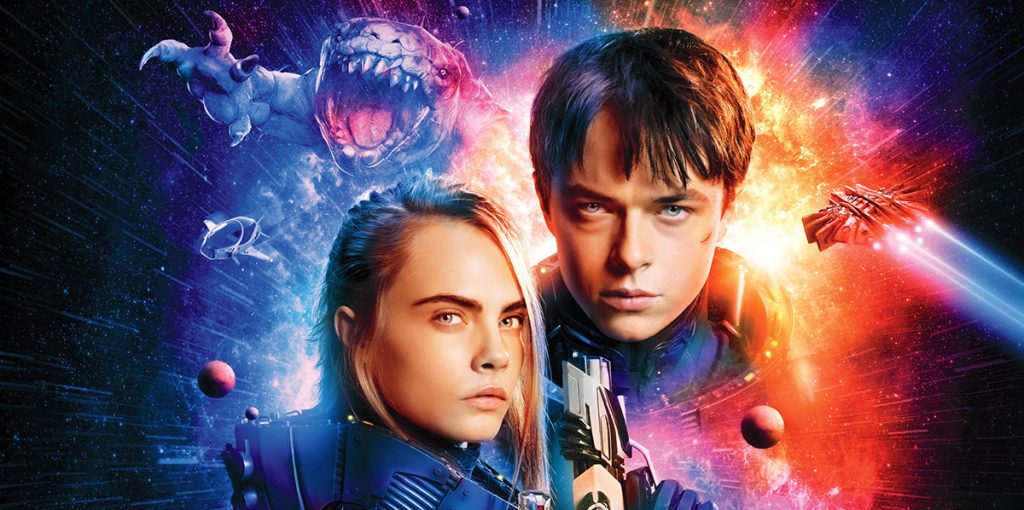
Released in 2017, Valerian and the City of a Thousand Planets was one of the most ambitious science fiction films of the decade. Directed by Luc Besson (The Fifth Element), the movie promised a dazzling intergalactic adventure based on the beloved French comic series Valérian and Laureline by Pierre Christin and Jean-Claude Mézières.
With its staggering budget, cutting-edge visuals, and big-name cast, Valerian had all the makings of a blockbuster franchise. Instead, it became a cautionary tale of how ambition and spectacle don’t always guarantee success.
The Story
The film follows Valerian (Dane DeHaan) and Laureline (Cara Delevingne), two special operatives tasked with maintaining peace across the universe. They are sent to Alpha, the “City of a Thousand Planets,” a massive space station that has grown into a hub of interspecies cooperation and culture.
Beneath Alpha’s shining exterior lies a mystery—something is threatening its survival. Valerian and Laureline must uncover the truth, protect the city, and confront their own relationship in the process.
The Cast
Dane DeHaan as Valerian – A skilled but cocky space agent.
Cara Delevingne as Laureline – His sharp, no-nonsense partner.
Clive Owen as Commander Filitt – A high-ranking officer with secrets.
Rihanna as Bubble – A shapeshifting performer who aids the heroes.
Ethan Hawke in a small but quirky role as Bubble’s flamboyant manager.
Visual Spectacle
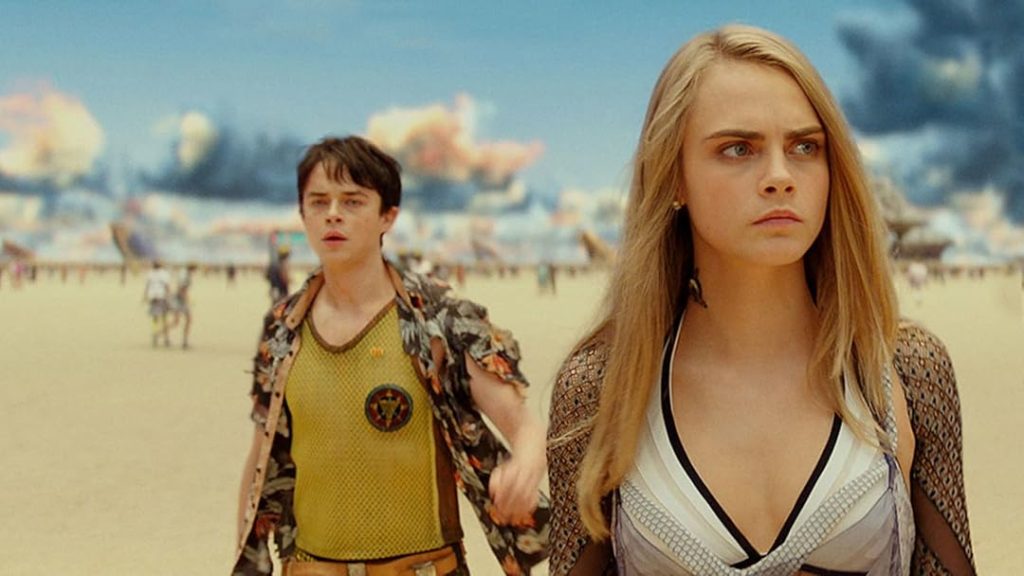
If there’s one thing Valerian delivered, it was visual wonder. From alien markets existing in multiple dimensions to the colorful alien species of Alpha, the film was a feast for the eyes. Besson’s attention to world-building and creativity echoed his work on The Fifth Element but on a much grander scale.
The film’s design, inspired heavily by the original comics, helped create some of the most unique visuals in modern science fiction cinema.
Reception and Struggles
Despite its breathtaking visuals, Valerian struggled with critics and audiences alike. The film was criticized for:
- Weak character chemistry between DeHaan and Delevingne, with many finding their romance unconvincing.
- A predictable plot, which didn’t live up to the visual innovation.
- Inconsistent pacing, where the spectacle often overshadowed storytelling.
- With a reported budget of nearly $180 million, Valerian was one of the most expensive European films ever made. Unfortunately, it grossed only about $225 million worldwide, far below what it needed to break even.
Legacy
Although Valerian and the City of a Thousand Planets didn’t launch the franchise it aspired to, it remains a cult favorite for fans of sci-fi visuals and ambitious world-building. It stands as proof of Luc Besson’s creativity and willingness to take risks, even if the execution faltered.
Conclusion:
Valerian and the City of a Thousand Planets is remembered as a bold but flawed experiment—a film that prioritized spectacle over substance. While it didn’t resonate with mainstream audiences, it left behind a unique visual legacy and highlighted just how challenging it is to balance blockbuster ambition with solid storytelling.
