


Spider-Man (2002) – The Film That Launched a New Era of Superhero Movies

Before the Marvel Cinematic Universe took over Hollywood, before multiverses and billion-dollar box office giants, there was Spider-Man (2002). Directed by Sam Raimi and starring Tobey Maguire, the film not only brought Marvel’s most beloved hero to the big screen in a big way—it also reshaped what superhero cinema could be.
The Story
The film follows the journey of Peter Parker (Tobey Maguire), a socially awkward high school student living in Queens, New York. After being bitten by a genetically engineered spider, Peter develops superhuman abilities—strength, agility, wall-crawling, and his iconic web-shooting.
At first, Peter uses his powers for personal gain. But after his beloved Uncle Ben is tragically killed, Peter embraces the responsibility that comes with his abilities, learning the timeless lesson: “With great power comes great responsibility.”
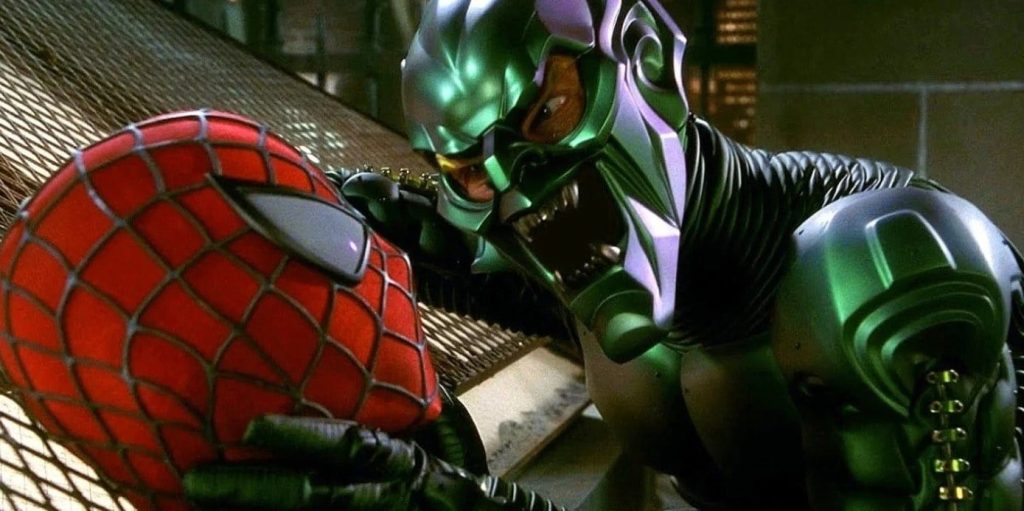
Now as Spider-Man, Peter must protect the city and face off against his first great foe: Norman Osborn (Willem Dafoe), the brilliant but unhinged industrialist who transforms into the villainous Green Goblin.
The Cast
The casting was crucial to the film’s success, bringing a mix of heart, menace, and relatability:
- Tobey Maguire as Peter Parker / Spider-Man – His earnest, soft-spoken portrayal made Peter relatable and grounded.
- Kirsten Dunst as Mary Jane Watson – Peter’s love interest and aspiring actress, caught between her own dreams and the dangers of being close to Spider-Man.
- Willem Dafoe as Norman Osborn / Green Goblin – Equal parts menacing and tragic, Dafoe’s performance became iconic in comic book cinema.
- James Franco as Harry Osborn – Norman’s son and Peter’s best friend, setting up emotional conflicts for future films.
- Cliff Robertson as Uncle Ben – Delivering the unforgettable words that define Spider-Man’s identity.
- Rosemary Harris as Aunt May – Warm, wise, and protective, Harris embodied one of comics’ most beloved supporting characters.
Impact and Reception
When Spider-Man hit theaters in May 2002, it became a cultural phenomenon. The film grossed over $825 million worldwide, becoming one of the highest-grossing films of its era. It broke opening weekend records, proving that superhero films could be both critical and commercial powerhouses.
Critics praised Raimi’s heartfelt direction, Maguire’s sincerity, and Dafoe’s unhinged villainy. The film balanced action, romance, and humor while staying true to the spirit of the comics.
Legacy
Spider-Man (2002) paved the way for the superhero movie boom that dominates today’s box office. Its success directly led to sequels—Spider-Man 2 (2004), widely considered one of the best superhero films ever made, and Spider-Man 3 (2007).
Beyond Raimi’s trilogy, the film’s DNA is seen in every version of Spider-Man that followed: Andrew Garfield’s Amazing Spider-Man films, Tom Holland’s MCU portrayal, and even the animated Spider-Verse films. Raimi’s vision of New York, Spider-Man’s struggles, and the emotional weight of Uncle Ben’s words remain at the heart of the character’s legacy.
Conclusion
Spider-Man (2002) wasn’t just another blockbuster—it was a cultural shift. It reminded audiences that superhero stories could be emotional, character-driven, and universally relatable. Over 20 years later, Tobey Maguire’s web-slinger still holds a special place in fans’ hearts, not just as a hero in red and blue, but as the film that made the superhero genre soar.
