


Django Unchained (2012) – Tarantino’s Bold, Bloody Western

Few films have blended history, grit, and Quentin Tarantino’s signature storytelling style quite like Django Unchained (2012). With its mix of Western tropes, revenge drama, and sharp dialogue, the film became both a commercial hit and a critical talking point, cementing itself as one of Tarantino’s most daring projects.
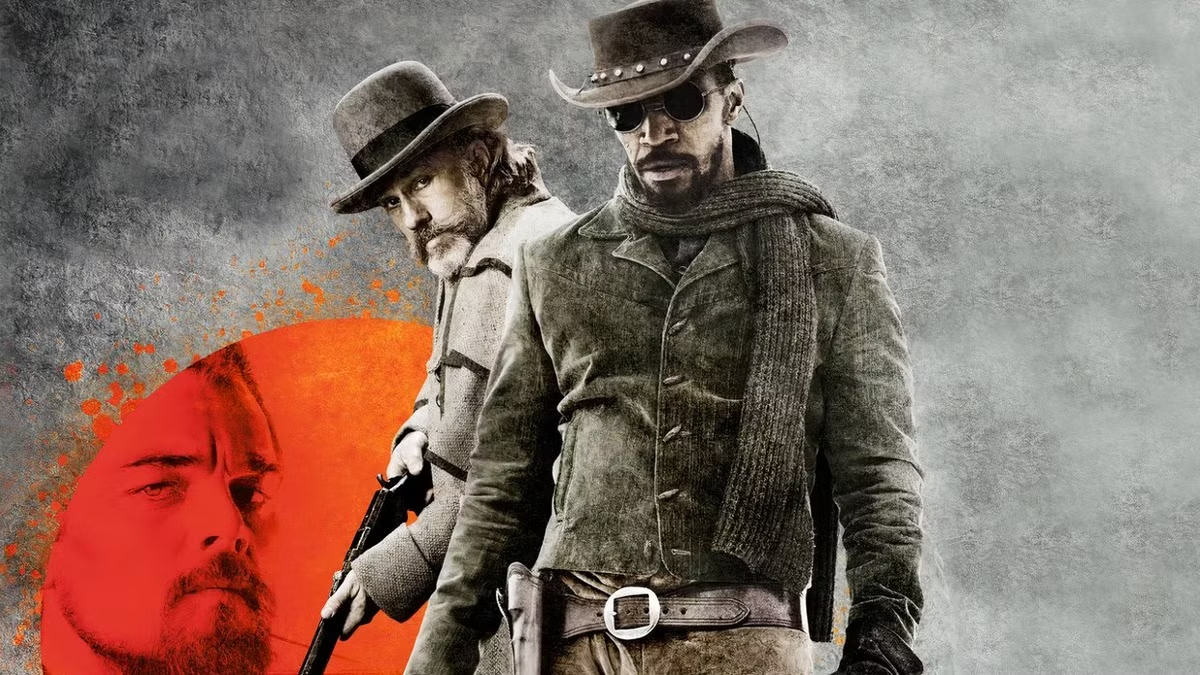
Set in the American South just two years before the Civil War, the film follows Django (Jamie Foxx), an enslaved man who is freed by the eccentric bounty hunter Dr. King Schultz (Christoph Waltz). Schultz, impressed by Django’s knowledge of the wanted men he pursues, takes him on as a partner.
Together, they become an unlikely duo of bounty hunters, working their way through the South with one goal in mind: freeing Django’s wife, Broomhilda (Kerry Washington), who is enslaved on the notorious Candieland plantation owned by Calvin Candie (Leonardo DiCaprio).
What unfolds is a tense, violent, and emotionally charged journey of liberation and justice, punctuated by Tarantino’s dark humor and bold style.
Jamie Foxx as Django, transforming from enslaved man to empowered gunslinger. Christoph Waltz as Dr. King Schultz, a German bounty hunter with wit and charm, a role that won Waltz an Academy Award. Leonardo DiCaprio as Calvin Candie, the brutal plantation owner, playing against type in one of his most unsettling performances. Kerry Washington as Broomhilda von Shaft, Django’s wife and motivation throughout the film. Samuel L. Jackson as Stephen, Candie’s loyal and manipulative house servant, bringing depth and menace to the role.
Django Unchained was both a critical and commercial success, grossing over $426 million worldwide, making it Tarantino’s highest-grossing film at the time. Critics praised the performances, particularly those of Foxx, Waltz, and DiCaprio, as well as Tarantino’s script and bold directing choices.
The film went on to win two Academy Awards: Best Original Screenplay (Quentin Tarantino) and Best Supporting Actor (Christoph Waltz).
However, it also sparked debate due to its graphic violence, liberal use of racial slurs, and the way it approached America’s history of slavery. Despite the controversy, many viewed it as a powerful reclamation story told through Tarantino’s stylized lens.
More than a decade later, Django Unchained stands as one of Tarantino’s most influential works. It helped reignite mainstream interest in Westerns, particularly the “revisionist” kind, and cemented Jamie Foxx’s place as a powerhouse lead.
The film is often remembered not just for its explosive action sequences, but also for its cultural impact—taking one of history’s darkest periods and reshaping it into a story of vengeance, resilience, and empowerment.
Django Unchained is brutal, stylish, and unforgettable—a daring blend of history and Hollywood spectacle. Love it or hate it, there’s no denying it carved out a unique space in both Tarantino’s career and modern cinema.
