
Resident Evil (2002): The Beginning of a Cult Action-Horror Franchise
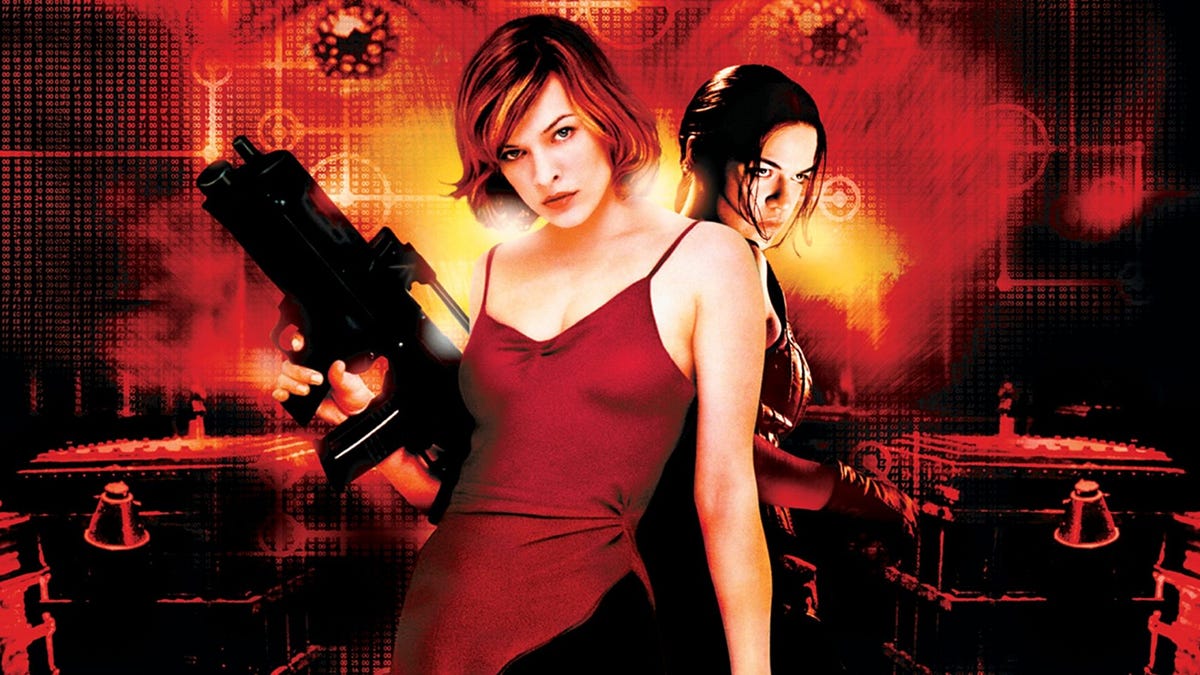
In 2002, director Paul W.S. Anderson brought one of the most popular video game series of all time to the big screen with Resident Evil. Loosely inspired by Capcom’s survival-horror games, the film delivered a mix of science fiction, action, and zombie thrills that would go on to spawn a six-movie franchise and pave the way for future game-to-film adaptations.
Plot Overview
The film centers on Alice (played by Milla Jovovich), a woman who wakes up in a mysterious mansion with no memory of who she is or how she got there. She soon discovers she is trapped inside the Hive, an underground genetic research facility run by the Umbrella Corporation.
When the Hive’s artificial intelligence, the Red Queen, seals the facility after a viral outbreak, Alice and a team of Umbrella operatives must navigate its deadly corridors. Along the way, they encounter hordes of zombies, mutated creatures like the Licker, and lethal security traps. As Alice’s memories slowly return, she realizes she has a personal connection to Umbrella’s dark experiments.
The Cast
Milla Jovovich as Alice
Michelle Rodriguez as Rain Ocampo
Eric Mabius as Matt Addison
James Purefoy as Spence Parks
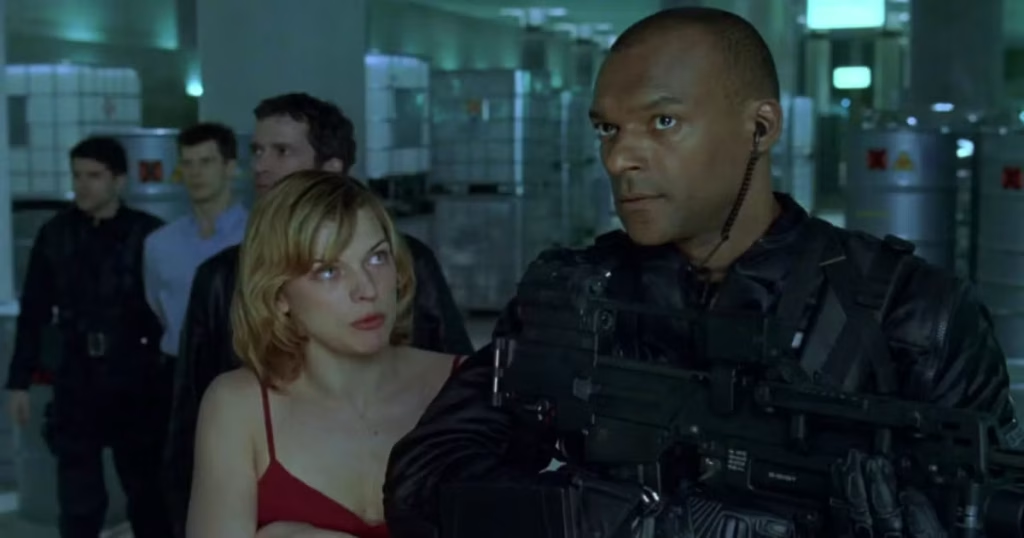
Colin Salmon as James “One” Shade
Style and Tone
While the video games leaned heavily on slow-burn suspense and gothic horror, Anderson’s Resident Evil leaned toward action and sci-fi horror, featuring slick fight choreography, fast pacing, and a pounding industrial-metal soundtrack (with contributions from Marilyn Manson).
The infamous laser corridor sequence, in which Umbrella soldiers are trapped and cut apart by a deadly laser grid, remains one of the most iconic moments in modern horror-action cinema.
Reception
Upon release, Resident Evil received mixed reviews, with critics divided over its faithfulness to the source material. Some praised its sleek visuals and Milla Jovovich’s breakout performance, while others criticized its writing and deviation from the games’ tone.
Despite this, audiences turned out in force. Made on a budget of about $33 million, it grossed more than $100 million worldwide, proving that video game adaptations could be box office successes.
Legacy
The success of Resident Evil kickstarted a franchise that spanned six films, ending with Resident Evil: The Final Chapter in 2016. Jovovich’s portrayal of Alice became iconic, and while the movies often divided critics and gamers, the franchise grew into one of the highest-grossing video game-inspired film series in history.
The 2002 original also played a role in reviving zombie media in the 2000s, arriving just before 28 Days Later (2002) and Zack Snyder’s Dawn of the Dead (2004).
Final Thoughts
Though not a faithful adaptation of Capcom’s games, Resident Evil (2002) succeeded in carving its own identity. With its sci-fi horror action, stylish set pieces, and a memorable lead performance from Milla Jovovich, it laid the groundwork for one of the most enduring franchises in video game cinema.
