

Dark Matter (2015): Identity, Survival, and Second Chances Among the Stars

Dark Matter (2015–2017) is a science-fiction television series that built a loyal fanbase through strong character writing, moral ambiguity, and an intriguing central mystery. Created by Joseph Mallozzi and Paul Mullie of Stargate fame, the show blends space opera with psychological drama, exploring whether people are defined by who they were—or by who they choose to become.
The story begins aboard the Raza, where six strangers awaken from stasis with no memories of their names, histories, or allegiances. Identifying themselves only as One through Six, the crew must work together to survive while uncovering fragments of their forgotten pasts. As the truth emerges, they learn they were once criminals, mercenaries, and power players in a galaxy ruled by ruthless corporations. This revelation forces each character to confront the unsettling gap between their former selves and the people they are becoming.
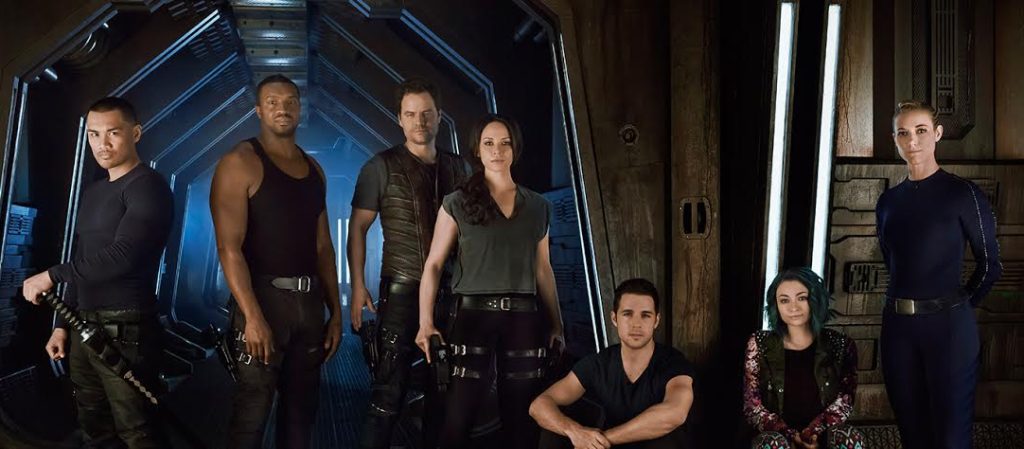
The cast and characters are central to the show’s appeal, with Marc Bendavid as the morally driven One, Melissa O’Neil as the strong and pragmatic leader Two, Anthony Lemke as the volatile and sarcastic Three, Alex Mallari Jr. as the disciplined swordsman Four, Jodelle Ferland as the emotionally complex and tragic Five, and Roger Cross as the principled Six. Zoie Palmer’s fan-favorite performance as Android, the Raza’s evolving artificial intelligence, adds depth, humor, and a compelling exploration of consciousness and free will.
Set in a harsh universe dominated by mega-corporations and interstellar conflict, Dark Matter presents a future where profit outweighs morality and survival often requires compromise. Political intrigue, shifting alliances, cloning, and artificial intelligence rights gradually expand the scope of the story, while the core focus remains on character growth and ethical choice rather than constant action.
Although the series was cancelled after three seasons, leaving several storylines unresolved, Dark Matter remains an underrated gem of modern sci-fi television. Its exploration of identity, redemption, and choice resonates long after the final episode, proving that even in the cold emptiness of space, humanity—and the struggle to define it—still matters.
