




WALL·E: Love, Loneliness, and Humanity’s Future Among the Stars
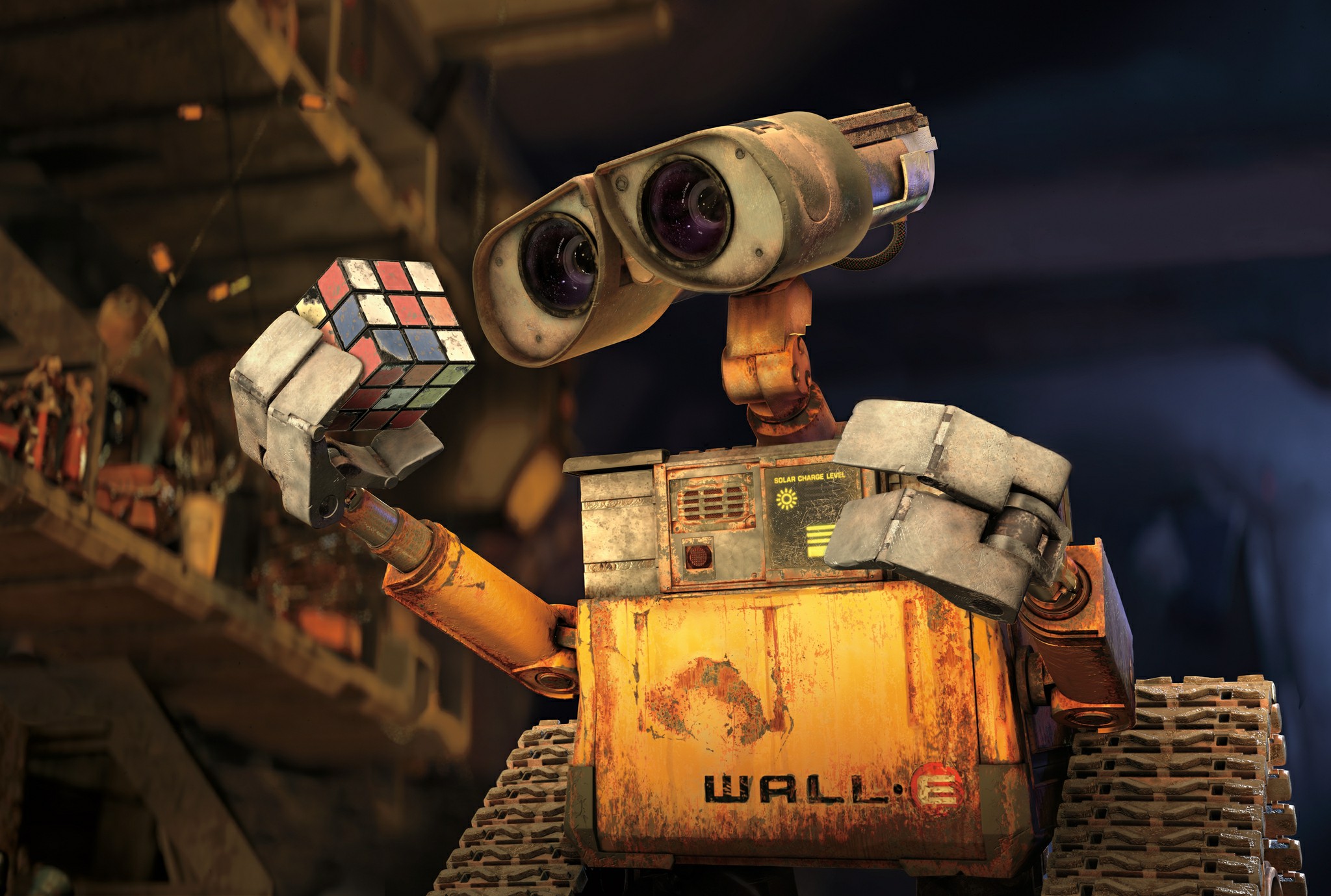
WALL·E (2008) is one of Pixar’s most ambitious and emotionally resonant films, blending science fiction, romance, and social commentary into a story that speaks as powerfully to adults as it does to children. Directed by Andrew Stanton, the film takes a bold creative risk by opening with long stretches of near silence, trusting visual storytelling to convey its themes of isolation, environmental collapse, and the enduring power of connection.
Set in a distant future where Earth has become uninhabitable due to pollution and unchecked consumerism, the story follows WALL·E, a small waste-collecting robot left behind to clean up the planet centuries after humanity’s evacuation. Alone for years, WALL·E develops a personality shaped by curiosity, routine, and a longing for companionship. His quiet existence changes when EVE, a sleek probe robot sent from space, arrives on Earth with a mysterious directive. Their unlikely bond becomes the emotional core of the film, transforming a simple love story into a catalyst for humanity’s possible return home.
At its heart, WALL·E is a critique of excess and complacency. The film presents a future where humans have surrendered responsibility, relying entirely on automation and convenience. Life aboard the starship Axiom is comfortable but hollow, with people physically and emotionally disconnected from the world around them. Through WALL·E’s innocence and persistence, the film argues that curiosity, care, and effort are essential to what makes life meaningful.
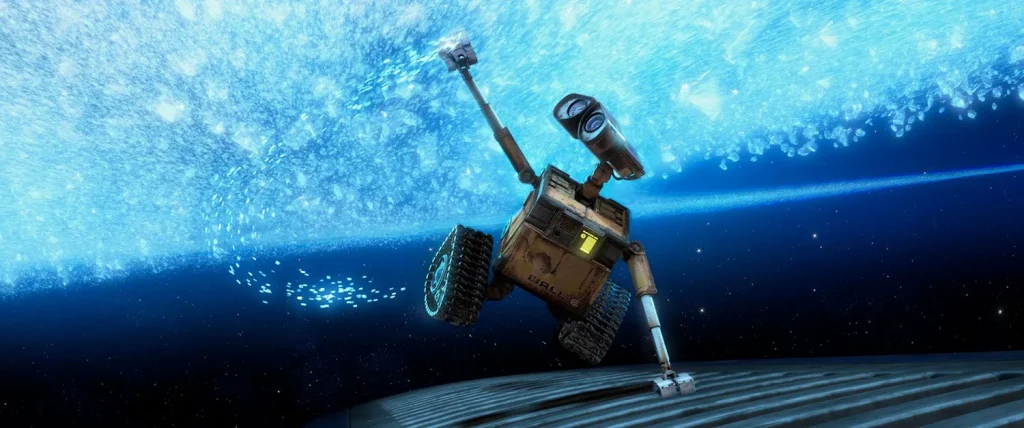
The characters, though mostly robotic, are rich with emotion and personality. Ben Burtt’s expressive sound design brings WALL·E to life, allowing the character to communicate more through beeps and gestures than most fully voiced protagonists. Elissa Knight voices EVE, capturing both precision and vulnerability, while Jeff Garlin and Fred Willard provide warmth and humor as Captain McCrea and the ship’s autopilot, AUTO. Together, the cast proves that strong characterization does not depend on dialogue alone.
Visually, WALL·E is a masterclass in animation. The abandoned Earth is depicted with dusty, cinematic realism, while the Axiom contrasts this with sterile brightness and smooth, artificial perfection. These visual opposites reinforce the film’s central themes, highlighting the cost of abandoning responsibility for comfort. Thomas Newman’s score enhances the emotional weight, balancing wonder, melancholy, and hope.
Critically, WALL·E was met with near-universal acclaim, praised for its bold storytelling, emotional depth, and environmental message. It is widely regarded as one of Pixar’s finest films and one of the greatest animated films of all time. The movie was also a major commercial success, grossing over $520 million worldwide, and won the Academy Award for Best Animated Feature, along with numerous other accolades.
Ultimately, WALL·E is a story about hope in the face of neglect. It suggests that even after immense damage, renewal is possible—if humanity chooses to care. Quiet, thoughtful, and deeply moving, WALL·E stands as a reminder that love, responsibility, and small acts of persistence can shape the future of an entire world.