

Die Hard (1988) – The Action Movie That Changed the Genre Forever
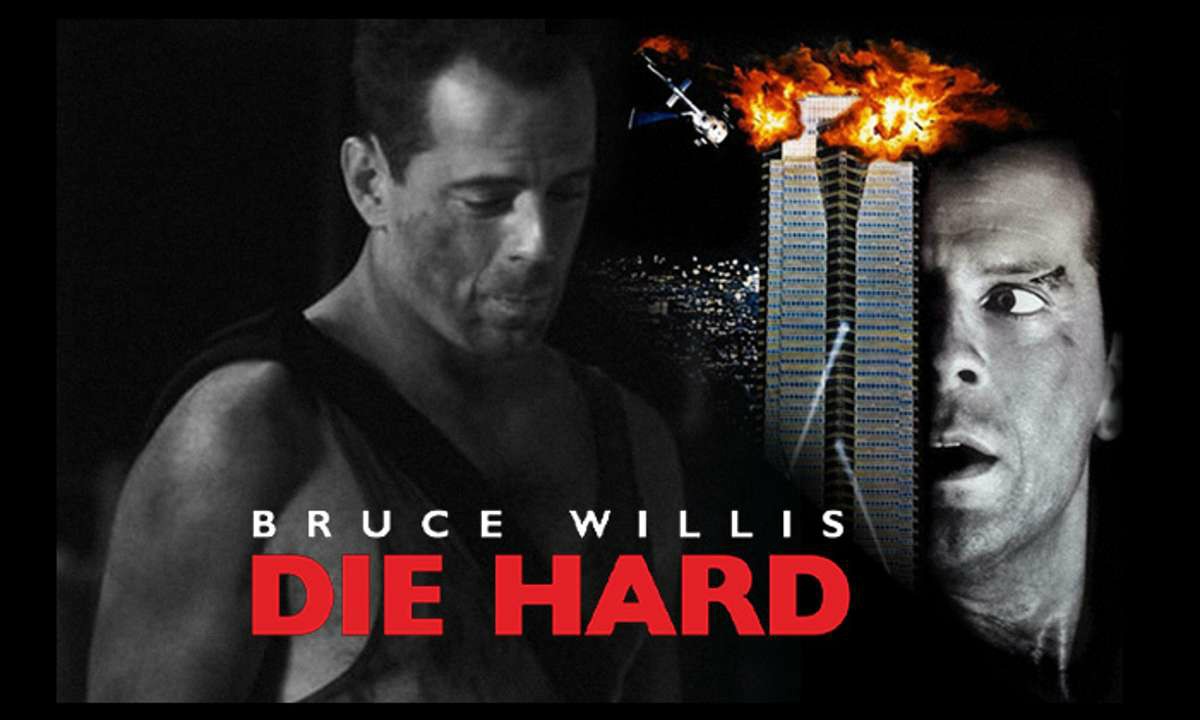
When Die Hard exploded onto screens in 1988, it didn’t just become a box office success—it redefined action cinema for an entire generation. Directed by John McTiernan and starring Bruce Willis in his first major film role, the movie introduced a new kind of action hero: vulnerable, sarcastic, and relatable, yet undeniably heroic.
The Story
Set on Christmas Eve, the film follows John McClane (Bruce Willis), a New York City police officer traveling to Los Angeles to reconcile with his estranged wife Holly (Bonnie Bedelia).
Holly works at the Nakatomi Plaza, where her company is hosting a holiday party. But the night takes a deadly turn when a group of heavily armed terrorists, led by the calculating Hans Gruber (Alan Rickman), seize the skyscraper and take the employees hostage.
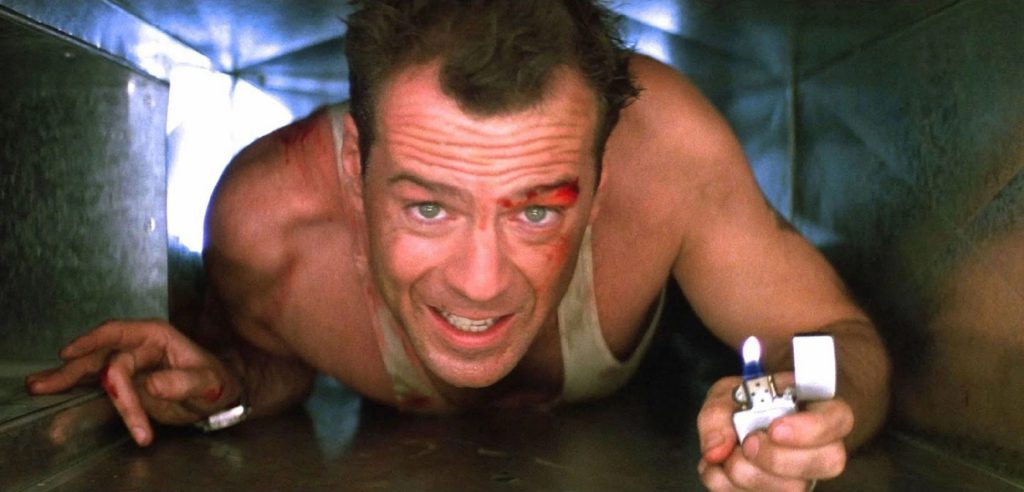
McClane manages to escape capture and, barefoot and armed with only his wits (and a stolen pistol), begins a one-man war against Gruber and his crew. Over the course of the night, McClane crawls through vents, dodges bullets, and leaves a trail of witty one-liners while trying to save his wife and stop the terrorists.
The Cast
The casting of Die Hard turned out to be lightning in a bottle:
- Bruce Willis as John McClane – At the time, Willis was best known for the TV comedy Moonlighting. His everyman quality and sarcastic delivery set him apart from the muscle-bound heroes of the era like Arnold Schwarzenegger and Sylvester Stallone.
- Alan Rickman as Hans Gruber – In his feature film debut, Rickman created one of cinema’s most memorable villains: sophisticated, ruthless, and cunning.
- Bonnie Bedelia as Holly Gennero-McClane – McClane’s estranged wife, strong-willed and unwilling to be a passive damsel.
- Reginald VelJohnson as Sgt. Al Powell – The empathetic LAPD officer who becomes McClane’s emotional lifeline over the radio.
- William Atherton as Richard Thornburg – A sleazy reporter whose actions jeopardize the hostages.
What Made It Different
Before Die Hard, most action films were dominated by near-invincible heroes who mowed down enemies with ease. McClane was different—he got tired, injured, and doubted himself. His sarcasm and vulnerability made him far more human than his contemporaries.
The film’s single-location setting, the towering Nakatomi Plaza, also became iconic. The claustrophobic environment heightened the tension and gave audiences a new kind of action experience.
Reception and Success
Die Hard was a box office hit, earning over $140 million worldwide on a $28 million budget. Critics praised its sharp writing, Willis’ breakthrough performance, and Rickman’s magnetic villainy. Over time, it has been recognized as one of the greatest action films ever made, and it sparked debates about whether it should officially be considered a Christmas movie (a debate that still rages every December).
Legacy and Franchise
The success of Die Hard spawned a long-running franchise:
- Die Hard 2 (1990) – Set in an airport during another Christmas showdown.
- Die Hard with a Vengeance (1995) – McClane teams up with Samuel L. Jackson in New York City.
- Live Free or Die Hard (2007) – McClane faces off against cyberterrorists.
- A Good Day to Die Hard (2013) – McClane heads to Russia with his estranged son.
While later sequels varied in quality, the original remains a genre-defining classic.
Conclusion
Die Hard changed action cinema forever. With its blend of humor, suspense, and a grounded hero, it set a new template for the genre and gave the world one of its most enduring movie icons in John McClane. More than 30 years later, its influence is still felt in every “lone hero versus overwhelming odds” action film that followed.
Yippee-ki-yay, indeed.
