

Star Wars: A New Hope – The Film That Changed Cinema Forever
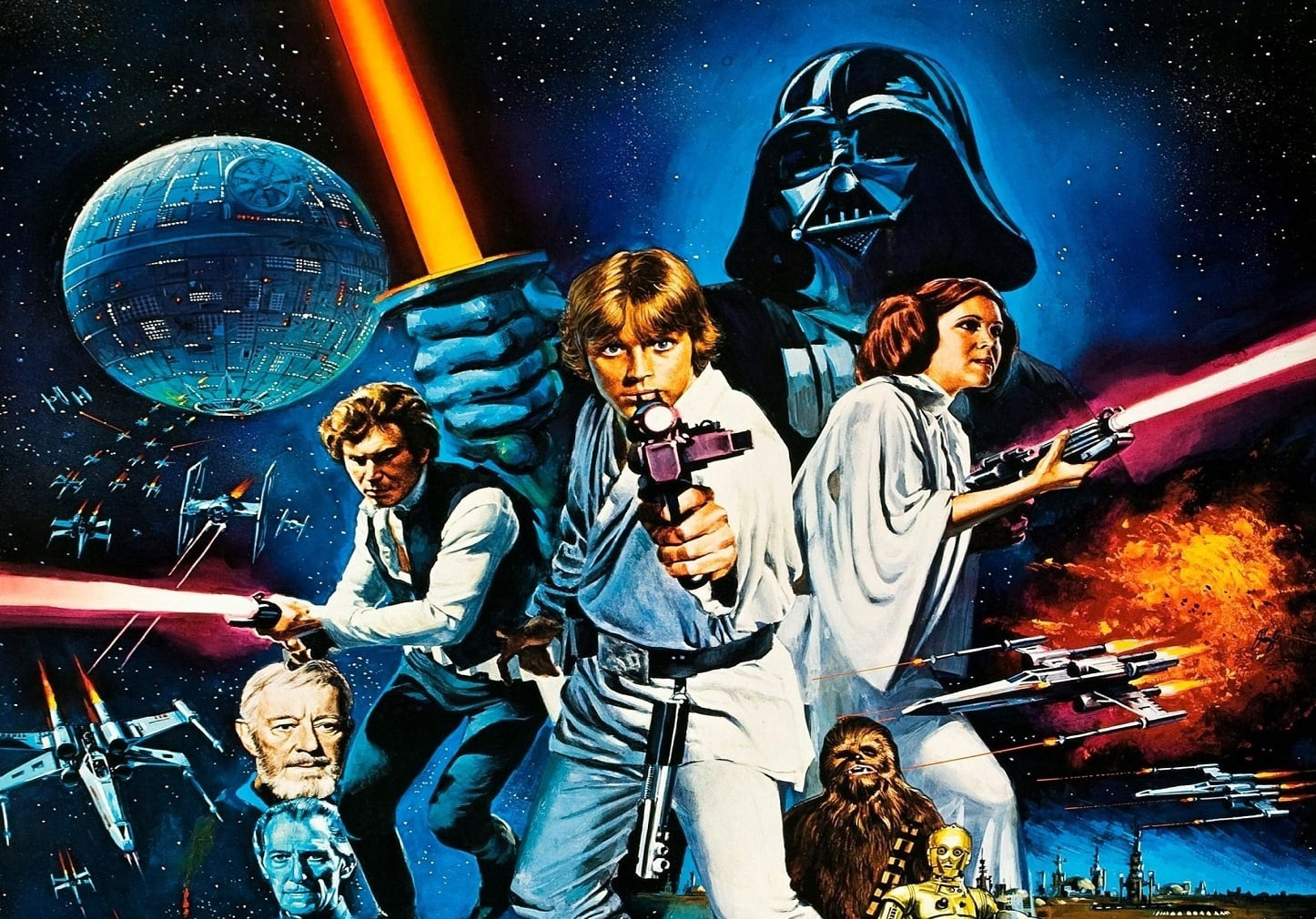
In 1977, audiences were introduced to a galaxy far, far away with the release of Star Wars: A New Hope, written and directed by George Lucas. What began as an ambitious space opera quickly became a cultural phenomenon, redefining science fiction and forever changing the landscape of cinema.
The Story
The film tells the story of Luke Skywalker (Mark Hamill), a farm boy from the desert planet Tatooine who dreams of adventure beyond his small world. His life changes when he discovers a hidden message from Princess Leia Organa (Carrie Fisher), a leader of the Rebel Alliance who has been captured by the tyrannical Empire.
With the guidance of the wise Jedi Master Obi-Wan Kenobi (Alec Guinness), the aid of charming smuggler Han Solo (Harrison Ford) and his co-pilot Chewbacca (Peter Mayhew), along with the loyal droids R2-D2 and C-3PO, Luke embarks on a journey to rescue Leia and take on the Empire’s ultimate weapon — the Death Star, a space station capable of destroying entire planets.
The Cast
- Mark Hamill as Luke Skywalker – The young hero whose journey from farm boy to Jedi-in-training defined the classic hero’s arc.
- Harrison Ford as Han Solo – A roguish smuggler who brought charisma and humor to the story.
- Carrie Fisher as Princess Leia Organa – A fearless leader, intelligent and strong-willed, who became one of the most iconic heroines in cinema.
- Alec Guinness as Obi-Wan Kenobi – The wise Jedi mentor guiding Luke toward his destiny.
- Peter Cushing as Grand Moff Tarkin – The ruthless Imperial commander.
- David Prowse as Darth Vader (voiced by James Earl Jones) – The menacing Sith Lord whose presence became legendary.
Groundbreaking Production
George Lucas took inspiration from classic mythology, samurai films, and space serials of the 1930s and 40s. But what set A New Hope apart was its groundbreaking use of special effects by Industrial Light & Magic (ILM), creating visuals unlike anything audiences had seen before. The blend of futuristic technology with lived-in, gritty environments gave the galaxy a sense of realism.
Composer John Williams’ iconic score, particularly the soaring main theme, elevated the film into something timeless, becoming one of the most recognizable soundtracks in history.
Reception and Box Office
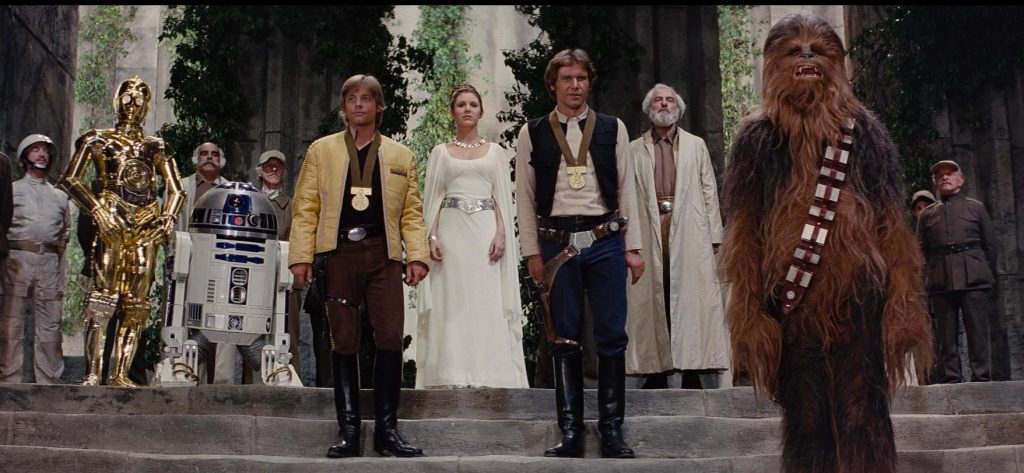
Upon release on May 25, 1977, Star Wars: A New Hope became an instant hit. It grossed over $775 million worldwide (making it, at the time, the highest-grossing film ever) and received critical acclaim for its storytelling, visuals, and groundbreaking sound design.
It also earned 10 Academy Award nominations, winning six Oscars including Best Visual Effects, Best Film Editing, and Best Original Score.
Cultural Impact
More than just a film, A New Hope created an entire pop culture movement. It introduced audiences to lightsabers, the Force, and one of cinema’s greatest villains, Darth Vader. The film inspired generations of filmmakers, spawned sequels, prequels, spin-offs, books, video games, theme park attractions, and countless merchandise.
It also cemented the “hero’s journey” structure in modern storytelling, influencing blockbusters from Harry Potter to The Matrix.
Legacy
Star Wars: A New Hope is not just the beginning of the saga — it’s the foundation of an empire. The film proved that science fiction could be both artistically rich and commercially successful, setting the stage for what would become the most influential franchise in cinematic history.
Even today, nearly 50 years later, the film remains a timeless classic that continues to inspire new generations to believe in hope, adventure, and the power of the Force.
