

The Uncanny Royalty of Attilan: Revisiting Marvel’s Inhumans
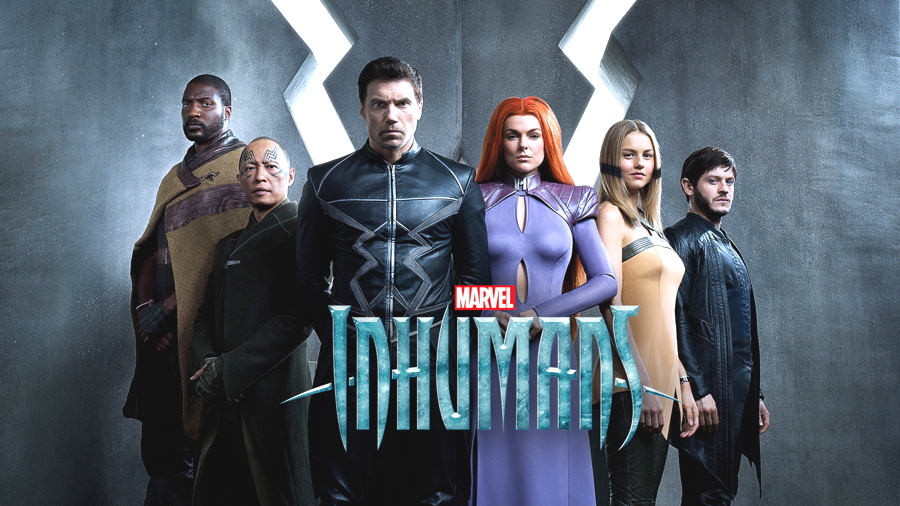
Before the MCU’s intricate Phase 4 began weaving cosmic tales, Marvel attempted to bring one of its oldest and most unique superhero families, the Inhumans, to the small screen. Initially envisioned as a full-scale feature film, the project ultimately landed as the eight-episode Inhumans (2017) television series—a bold, albeit troubled, attempt to introduce the Royal Family of Attilan, complete with their majestic city, internal drama, and spectacular powers, to a global audience.
Though short-lived and met with significant controversy, Inhumans represents one of Marvel’s most ambitious experiments in adapting its deep-cut characters, bridging the gap between its TV and film divisions with a story centered on the alien-enhanced descendants of humanity.
A High-Concept Story with a Terrestrial Fall
Released in September 2017, Inhumans was the first (and only) Marvel television series to have its first two episodes filmed with IMAX cameras and debuted globally in IMAX theaters before airing weekly on ABC. Produced in partnership with ABC Studios and Marvel Television, the series ran for a single 8-episode season.
Unlike the Netflix or FX Marvel shows, Inhumans was designed to be a direct, high-stakes introduction to the Royal Family of the Inhumans, who secretly govern their advanced society, Attilan, on the Moon.
The story centers on Black Bolt, the silent, commanding King whose voice is a destructive force, and his family. The core conflict begins when Maximus, Black Bolt’s human brother, stages a coup on Attilan, forcing the Royal Family—including the teleporting giant dog Lockjaw—to flee to Earth, landing them scattered across the unfamiliar landscape of Hawaii. The plot follows their race to reunite, reclaim the throne, and save their hidden society from Maximus’s volatile rule.
Visual Constraints and Character Design
Inhumans was immediately distinctive for its unique premise, but its visual execution became a major point of criticism. The series attempted to portray a sophisticated, moon-based civilization and dazzling superpowers, but the production was often perceived as constrained by a television budget.
The visual style was frequently debated, particularly the portrayal of key powers. While the CG work for Lockjaw was generally praised, Medusa’s iconic, prehensile red hair (a vital part of her power set) was often rendered with limitations, leading to her being shown with mostly shorn hair for much of the series. The tone mixed political drama and soap opera with superhero action, aiming for a grand scale that often fell short of fan expectations set by the cinematic MCU.
The Royal Cast
The series featured a strong ensemble of actors bringing the Royal Family and supporting characters to life:
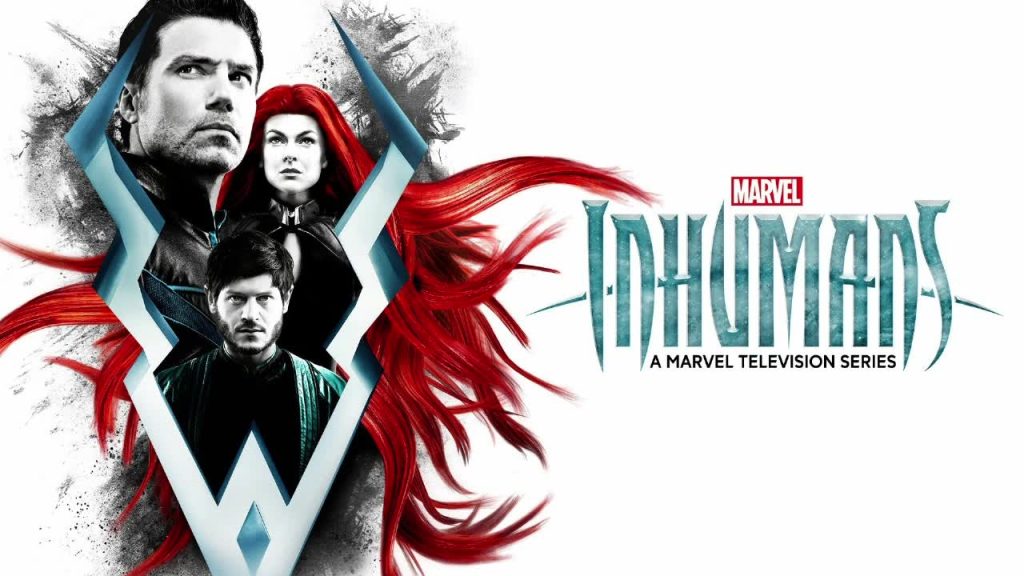
- Anson Mount played Black Bolt, communicating entirely through sign language and intense facial expressions, successfully conveying the King’s quiet authority and immense burden.
- Serinda Swan took on the role of Medusa, the Queen, attempting to capture her regal nature and fierce loyalty.
- Iwan Rheon (known for Game of Thrones) was cast as the complex antagonist, Maximus, the King’s human brother whose resentment of his non-powered status fueled his revolution.
- Ken Leung portrayed Karnak, Black Bolt’s cousin and advisor, who possesses the power to perceive and calculate the fault lines in all things, both physical and metaphorical.
- Eme Ikwuakor played Gorgon, the military leader of Attilan with powerful, hoofed feet capable of generating seismic waves.
- Isabelle Cornish was Crystal, Medusa’s younger sister, who can psychokinetically control the elements (earth, air, fire, and water), and the loyal companion of Lockjaw.
- Mike Moh rounded out the key family members as Triton, another cousin, an aquatic Inhuman with incredible physical prowess and the ability to breathe underwater.
Reception and Legacy
The Inhumans series received overwhelmingly negative reviews from fans and critics alike. Common criticisms focused on the quality of the visual effects, pacing issues, and the struggle to translate the truly strange and spectacular nature of the comic source material to a network television format.
However, the show remains a unique piece of Marvel’s history as a failed backdoor pilot for a film franchise that never materialized. It attempted to leverage the cinematic format (the IMAX release) while being fundamentally a television show. Though the series was swiftly canceled after one season, it served as a cautionary tale about balancing ambition with budgetary and format constraints in the superhero genre.
Why It’s Worth Revisiting
While often cited as one of Marvel’s less successful projects, Inhumans is a fascinating case study for fans interested in the broader Marvel Television experiment and complex comic book adaptations. The performances by Anson Mount as Black Bolt and Iwan Rheon as Maximus are often highlighted as genuine bright spots, along with the committed portrayals of the rest of the Royal Family.
It stands as a curiosity: an attempt to tell a cosmic, high-stakes story of deposed royalty, betrayal, and super-powered family drama, all condensed into a single, intense 8-episode arc that brought the bizarre lunar kingdom of Attilan crashing down onto a Hawaiian beach.